
ISA Publications Committee Meeting
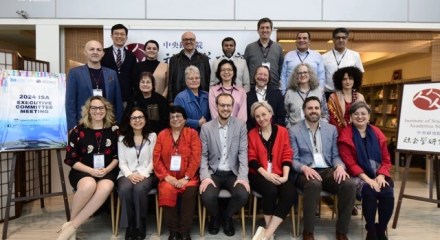
I was thrilled to visit Taipei again after the pandemic, this time for the International Sociological Association’s executive committee meeting. More specifically, I was there in my capacity as the editor for Current Sociology Monographs and SSIS book series. It was great to spend a few days with this group of lovely people. Academia Sinica … Continue reading
New Project on Industrial Biotechnology

I’m thrilled to lead the Responsible Research and Innovation (RRI) and policy components of the BBSRC funded project, Engineering Biology Mission Hub for Environmental Processing and Recovery of Metals (ELEMENTAL). Recovering critical minerals and metals will play a critical strategic role in circular economy and in pollution reduction/prevention. Key technical breakthroughs, such as new engineering … Continue reading
Bangaluru fieldwork
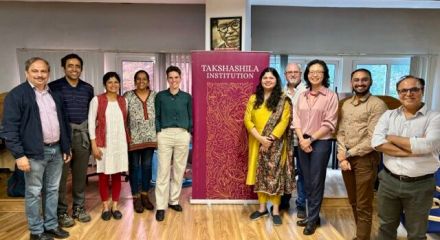
I had an amazingly productive week in Bangaluru at the beginning of January, discussing science diplomacy and global governance in synthetic biology and biobanking with natural and social scientists. I am so grateful to Suryesh K Namdeo, PhD and everyone at the DST Centre for Policy Research – IISc Bangalore for their rich insights and fantastic questions. It was … Continue reading
Editorships at the International Sociological Association
It was a great honour to be elected as the new editor for two of the International Sociological Association’s (ISA) publications:1) Current Sociology monographs (special issues) and 2) the SAGE Studies in International Sociology. Since last November, I’ve been supported by a wonderful group of colleagues at the ISA, especially my predecessor Professor Chaime Marcuello. … Continue reading
Why I worry (differently) about China’s biobanks

I wrote a commentary piece for the Progress Educational Trust last November. Below is an excerpt: China’s fast rise in the biobanking sector has spurred international concerns. One prominent example is the Chinese company BGI Group, which manages China National GeneBank. In 2021, Reuters warned that BGI might be accumulating data for military advantages from millions of women … Continue reading
Three Conferences in China
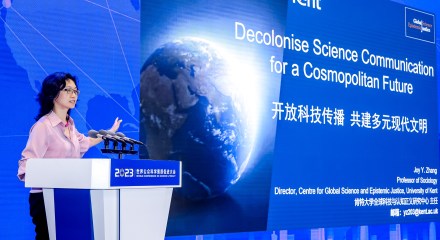
In mid-September I visited China for the first time since the pandemic. I was thrilled to see friends and colleagues in Chengdu and in Beijing. It was a real honour to discuss how to open up science communication with a distinguished panel this Tuesday in Beijing at the 2023 World Conference on Science Literacy (please … Continue reading
Co-Host UK-India G20 Event in Delhi
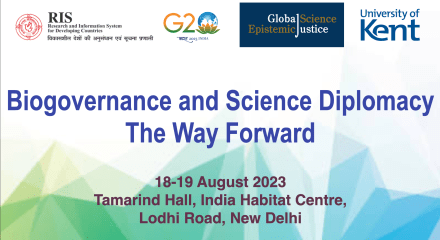
I felt very privileged to co-organise this UK-India dialogue on BioGovernance and Science Diplomacy with Krishna Ravi Srinivas at the RIS in Delhi last week, as part of a series of discussions leading up to this year’s G20 meeting. (Background paper and full agenda can be found here: https://lnkd.in/eMdA5Gzn) We were thrilled to have Dr Renu Swarup give the opening … Continue reading
Scandals and RRI – Call for Papers
In collaboration with Kathleen Vogel (Arizona State University), Sonia Ben Ouagrham-Gormley (George Mason University) I’m organising a special issue for the top quartile journal, Journal of Responsible Innovation on the topic ‘How Do Scandals Shape the Understanding and Practice of Responsible Research and Innovation?‘ Scientific scandals are particularly important to our understanding and practice of … Continue reading
Climate and Health
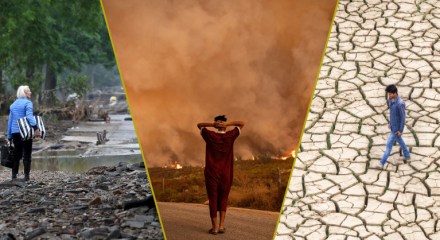
I joined the Wellcome Trust’s Climate Impacts Advisory Committee in June. The Wellcome Climate Impacts Awards fund transdisciplinary teams to deliver short-term, high-impact projects, combining evidence generation with communications and/or public engagement. The aim is to make the impacts of climate change visible across a wide range of physical and mental health outcomes in order to drive … Continue reading
New Article on Decolonising Science Governance
It’s so great to see my Critical Policy Studies (CPS) article on decolonisation out in March, during a series of events in which I was putting what I argued in the paper in practice . The paper, Decolonizing the Temporal and Relational Assumptions in Contemporary Science and Science Policies, captures a number of conceptual tools … Continue reading
 Joy Zhang