
Modernities, Global Governance, and the Commons
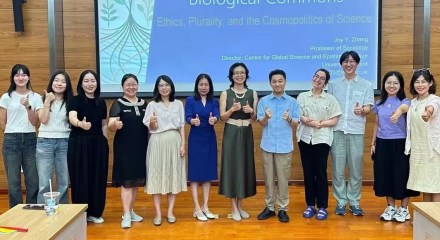
The question of how multiple modernities can be translated into coordinated forms of global governance remains one of the most pressing challenges of our time. For decades, sociologists have emphasised the ‘variety of modernities’—the recognition that different societies chart their own paths of development, shaped by histories, values, and social institutions. Yet, as science and … Continue reading
ISA Forum in Rabat
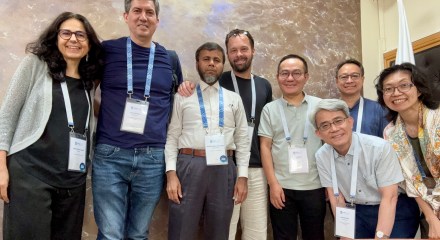
Like many others, I had a wonderful week in Rabat attending the International Sociological Association (ISA) Forum. This time, I was there in my capacity as a member of the ISA’s Publications Committee, and as editor of both the Current Sociology Monographs and the SAGE Studies in International Sociology (SSIS) book series. I always enjoy conversations with fellow members of the Publications Committee … Continue reading
Mirror Life
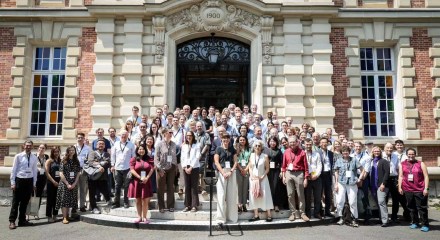
I was delighted to attend the Paris Conference on Risks from Mirror Life, held 12–13 June 2025 at the iconic Institut Pasteur. This event—featuring a public symposium and expert workshops—was the first in a global series to explore the potential benefits and profound risks of mirror biology, where biomolecules are inverted in handedness relative to natural life. … Continue reading
ARIA Summit and Project Kick-off
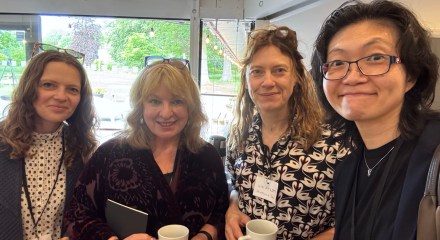
May was a milestone month as we officially set Futuring Biological Commons—our ARIA-funded project—into motion. The turnaround for postdoc recruitment was incredibly tight, but we were so lucky to have a fantastic group of candidates apply. The interviews were full-on, but genuinely such a pleasure. I’m absolutely thrilled that Oliver and Matthew will be joining the … Continue reading
DSIT–KCL Horizon-Scanning on Cyberbiosecurity
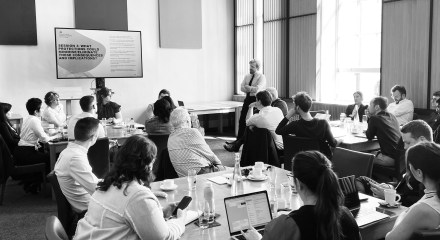
I was delighted to be invited to take part in a recent horizon-scanning workshop co-hosted by the UK Department for Science, Innovation and Technology (DSIT) and King’s College London. The event focused on a timely question: What cybersecurity protections, mitigations, and solutions should be considered to address emerging risks associated with the exploitation of common engineering … Continue reading
GESDA’s Anticipation Workshop on Planetarized Humanity
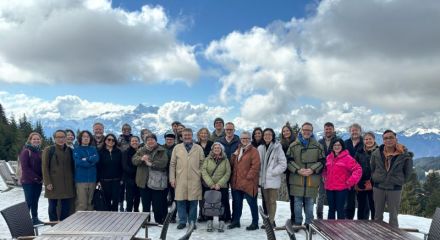
In late March, I had the pleasure of participating in GESDA’s Third Villars Anticipation Workshop, Planetarized Humanity: Rethinking Identity, Society, and Governance in a Technology-Driven World. Set in the stunning alpine village of Villars, Switzerland, the workshop brought together an interdisciplinary group to reflect on how emerging technologies—especially AI—might reshape our societies and our sense … Continue reading
UN CSW69 Parallel Event: Feminist Approaches to Justice
It was a tremendous honour to open one of the ‘Feminist Approaches to Justice’ series this March, held in conjunction with the 69th Session of the United Nations Commission on the Status of Women (CSW69). I attended the event as a member of the International Sociological Association (ISA) Publication Committee and as editor of special … Continue reading
Asilomar at 50
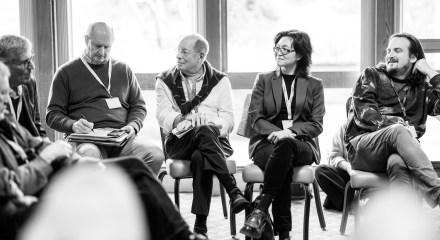
In 1975, a group of leading scientists gathered at the Asilomar Conference Grounds in California to discuss the potential risks of recombinant DNA technology. The result was a landmark moment in the self-governance of the life sciences—a model of proactive ethical reflection that has since shaped decades of science policy and public engagement. This year … Continue reading
UK-US/ UK-Japan Meetings on Synbio
Over the past few months, two bilateral academic meetings on engineering biology have been particularly informative and stimulating. The first was the UK-US Workshop on Bioengineering Solutions for Critical Minerals, held on December 5–6, 2024, at the Earth Galleries of the Natural History Museum in London. The event brought together representatives from the UK Government, the US Department … Continue reading
EP PerMed meetings in Brussels
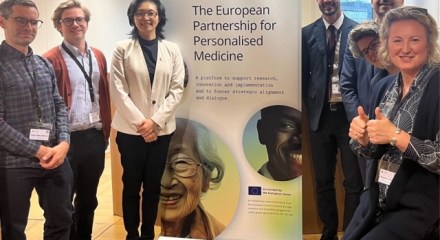
I was delighted to be appointed as a member of the European Partnership for Personalised Medicines ( EP PerMed)’ Citizen Engagement Board (CEB) since June. In the past three months, we’ve met online to comment on a pilot public survey (now out in Italy in Italian!). Apart from virtual meetings, it was wonderful to attend EP … Continue reading

