
DSIT–KCL Horizon-Scanning on Cyberbiosecurity
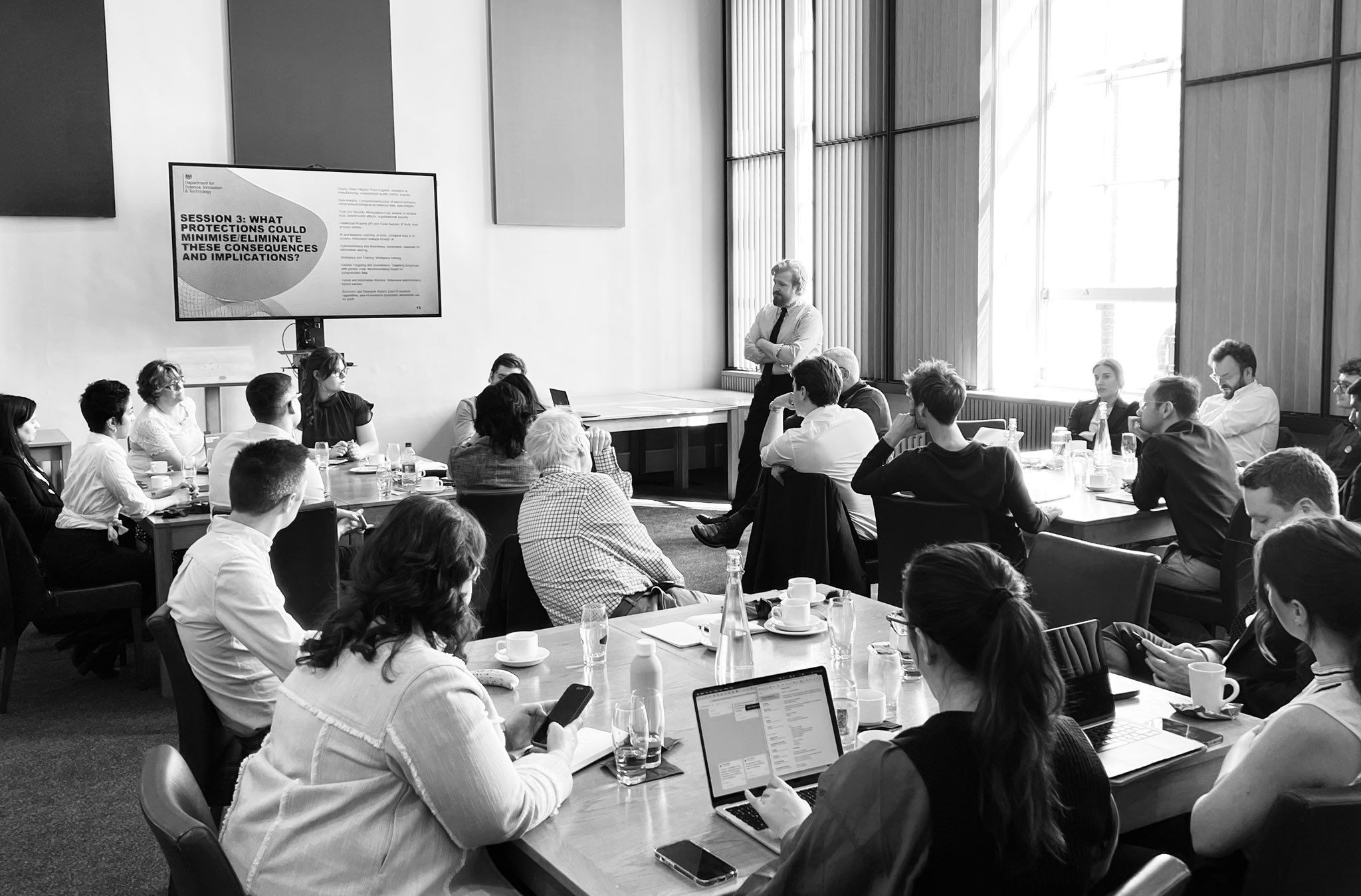
I was delighted to be invited to take part in a recent horizon-scanning workshop co-hosted by the UK Department for Science, Innovation and Technology (DSIT) and King’s College London. The event focused on a timely question: What cybersecurity protections, mitigations, and solutions should be considered to address emerging risks associated with the exploitation of common engineering biology (EngBio) lab equipment over the next 5–10 years?
The day brought together 29 stakeholders to map out future vulnerabilities in this evolving field. One of the key takeaways was the collective recognition that the cyber resilience of the EngBio sector remains worryingly low. Discussions led to a series of important recommendations for a wide range of communities, including government, academic institutions, EngBio laboratories, and commercial developers and suppliers.
Two proposals stood out as particularly relevant to the social science work we are leading at the Centre for Global Science and Epistemic Justice. The first is the call to improve public understanding of engineering biology and proactively counter disinformation, potentially through public-facing teams in laboratories that can swiftly address misinformation and help maintain trust. The second is the need for targeted cyber-training for EngBio professionals—an area that aligns closely with our research on how safety and responsibility are enacted and communicated within the field.
It was encouraging to see social science perspectives being actively woven into national discussions on cyberbiosecurity. I look forward to future updates and continued collaboration on this important—and increasingly urgent—topic.
 Joy Zhang